Debunking the Myth of “Abject Ballast”: Luxury Chinese Goods in the Siamese Royal Court
Read 0
If you have ever visited Wat Arun Ratchawararam, one of the most iconic sights is the collection of carved stone figures depicting Chinese officials, stone lions, and ancient warriors arranged around the main prang. Traditional historical accounts have often briefly explained that these objects were “abject ballast”—worthless pieces of stone that merchants placed in the holds of Chinese junks to provide ballast and keep the vessels stable on their return journey from China.
However, the documentary “Decoding Wat Arun”, in the episode “Debunking the Myth of Abject Ballast: Luxury Chinese Goods in the Siamese Royal Court,” presents new evidence indicating that these delicately carved stone figures were actually “super-luxury, branded goods” specially commissioned by the Siamese royal court as made-to-order pieces from shipyards and master artisan workshops in China. They were specifically intended to decorate royal temples, rather than being leftover stone waste as has long been mistakenly understood across the country.
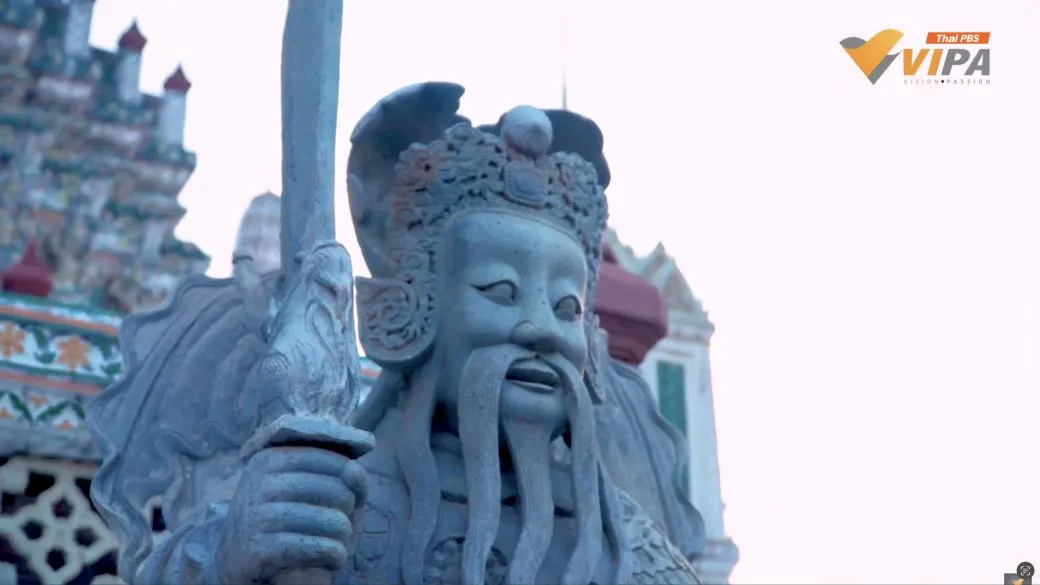
ภาพจากสารคดี ถอดรหัสวัดอรุณ
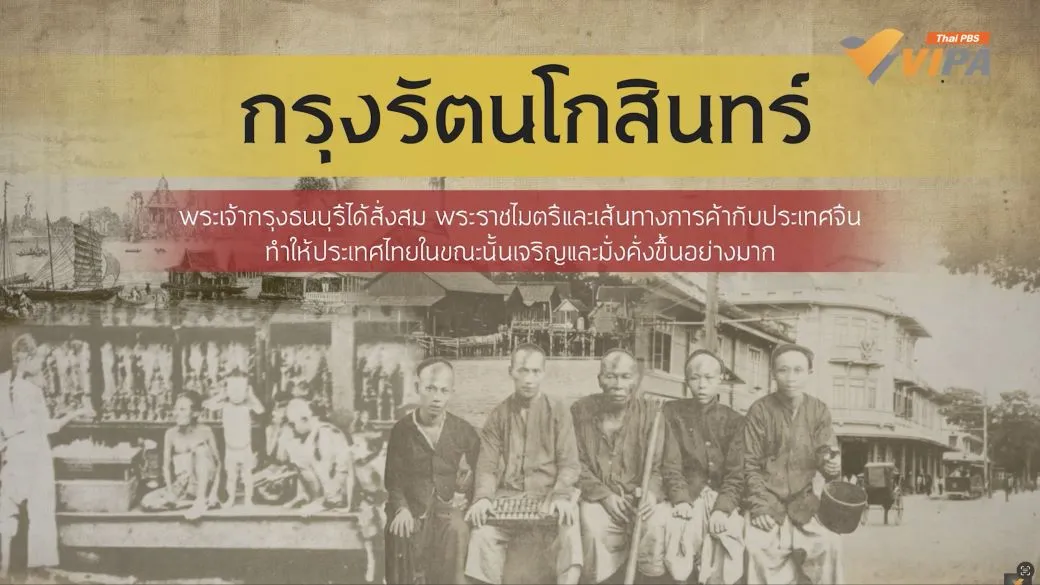
ภาพจากสารคดี ถอดรหัสวัดอรุณ
Revealing the trade relations and refined tastes of the Siamese royal court during the early Rattanakosin period, when Siam’s economy reached its peak through junk trade, the ordering of carved stone figures from China was not done randomly. There was a systematic process of sending designs and placing custom orders. Chinese artisans were required to carve high-quality granite to match the proportions, poses, and clothing specified by the Bangkok royal court, so that the figures could be placed correctly according to feng shui principles and Thai architectural design.
These stone figures therefore serve as important evidence of Siam’s “wealth” and financial capacity on the international trade stage, demonstrating its ability to import large quantities of premium architectural and decorative items from overseas.
The storytelling approach in this episode does not focus on teaching history through tedious memorization. Instead, it takes a sharp, engaging, and thought-provoking approach, encouraging audiences to challenge and break down long-held myths and beliefs, while exploring the fascinating journey of art across cultures.
The episode concludes on a warm note: the Chinese stone figures and glazed tiles at Wat Arun are not merely remnants once used as ballast on ships, but are masterpieces of evidence that tell the story of the vision and open-mindedness of people in the past, who embraced beauty and valuable influences from abroad and integrated them into their own culture, creating a lasting heritage that continues to endure to this day.
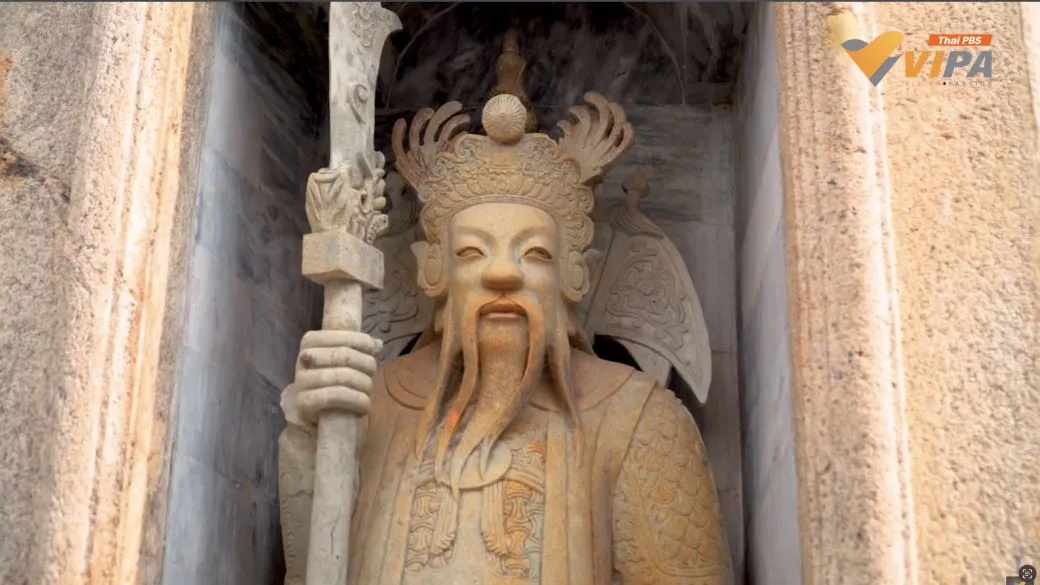
ภาพจากสารคดี ถอดรหัสวัดอรุณ
About Author
บอส หลงอินเดีย
นักเขียนผู้รักประวัติศาสตร์และความแตกต่าง ที่หลงใหลการเดินทางและการจดบันทึก เพื่อเข้าใจความคิดผู้คนต่างวัฒนธรรม