The Sugar Route: The Journey of Egg Yolks, Sugar, and Portuguese Blood
Read 0
If we take a look at a food item that represents the intersection between the Western and Eastern worlds, the documentary Nai Roi Rot (Taste Detective) in the episode "Foi Thong" is an analysis that takes us to trace the route of commerce and granulated sugar culture that has traveled across oceans for many centuries. This episode of the documentary does not tell the story of Foi Thong as an auspicious dessert on a Thai wedding dowry tray as we are familiar with, but chooses to look deep down into its historical roots to explore how this dish made of egg yolks and granulated sugar traveled across the hemisphere along with colonization, religious propagation, and global trade. The documentary weaves the story together by pointing out that Foi Thong is not just a sweet treat, but an anthropological record that reflects cultural exchange, the adaptation of groups of people, and the remnants of the past in the current way of life of small communities in Thailand.
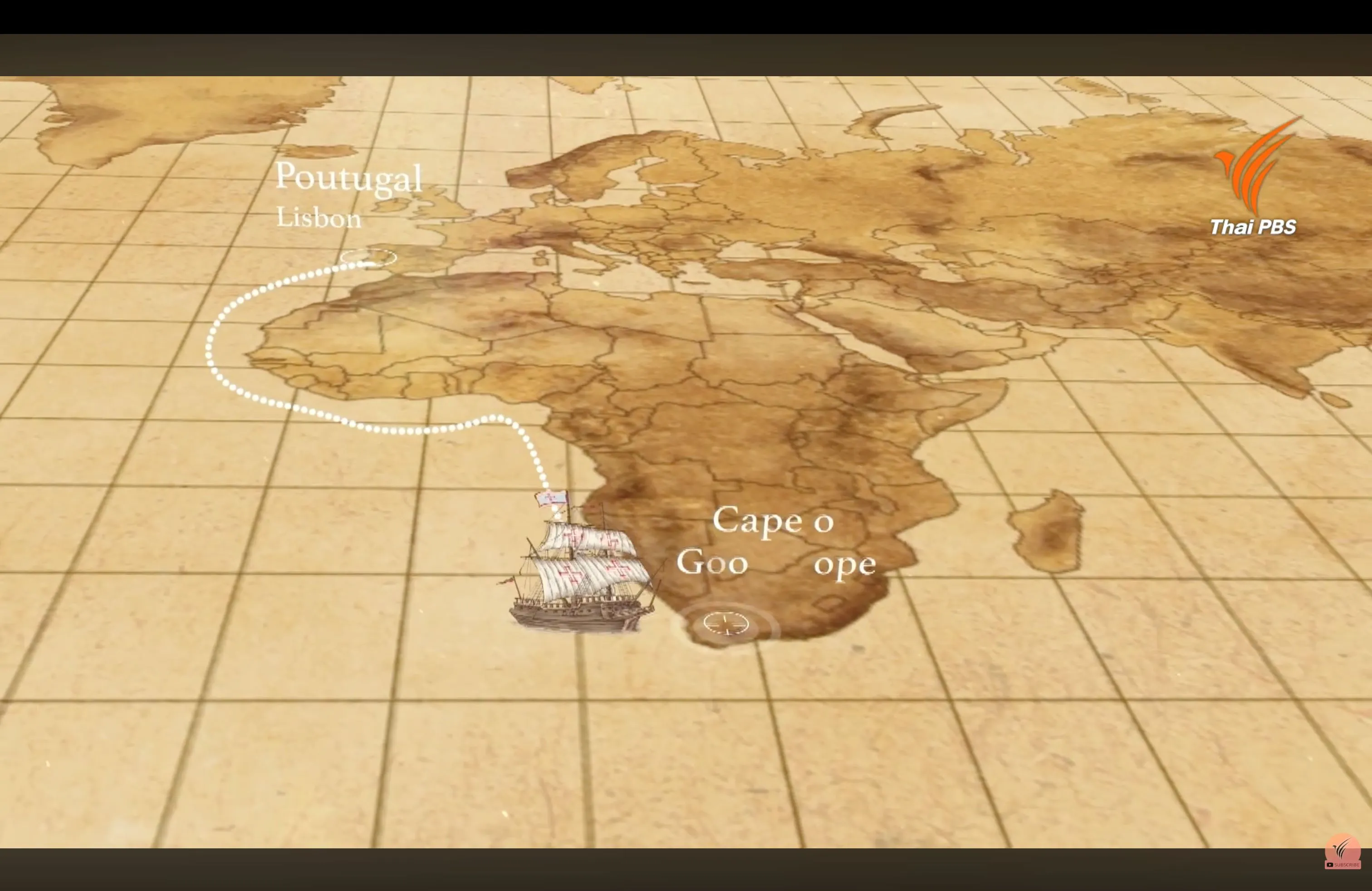
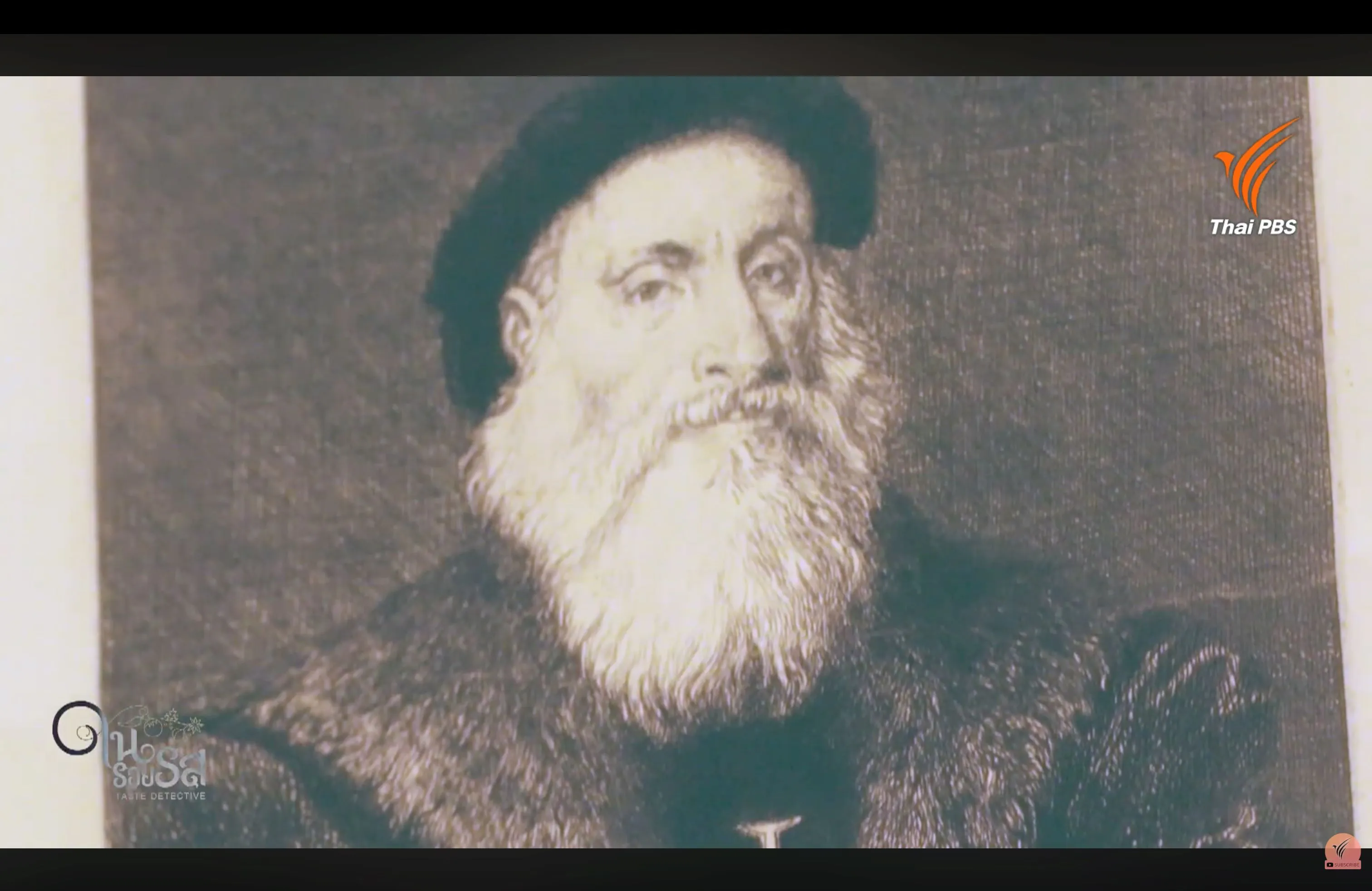
It begins with the documentary questioning the origin of Foi Thong in the European continent, before taking the audience back in time with the Portuguese navy during the Age of Discovery in the 15th-16th centuries. An interesting fact is that the Portuguese traveled into Asia and Thailand to "monopolize the spice trade and propagate Christianity", establishing fortresses and anchoring in India's Goa as their commercial hub before expanding into the Ayutthaya Kingdom. The arrival of the Portuguese did not bring only military technology and diplomacy, but they also brought along a sweet-making culture that utilized eggs and concentrated sugar, which was a hallmark of Portuguese convents. That was the starting point that allowed dessert recipes from Europe to begin taking root on Asian soil.
What is highly interesting is that the documentary expands the picture of this dessert's distribution, showing that it did not stop only in Thailand. Instead, Foi Thong has a parallel journey within East Asia, spreading to Japan under the name “Keiran Somen” through Portuguese trade in the city of Nagasaki. Meanwhile, in Thailand, this dessert became widespread largely through the work of “Thao Thong Kip Ma” (Marie Guimar), a woman of Portuguese-Bengali descent during the reign of King Narai the Great, who served as the head of the royal kitchen in the Ayutthaya court. Thao Thong Kip Ma adapted the original Portuguese dessert recipe, Fios de Ovos (threads of eggs), by using local duck eggs and coconut sugar, until it became the Foi Thong with a texture that suited the Thai palate. This adaptation demonstrates a culinary cultural compromise, which seamlessly integrated local ingredients with foreign techniques.
When Ayutthaya fell, the group of Portuguese-Thais migrated to settle a new location along the Chao Phraya River on the Thonburi side, becoming the “Kudeejeen Community,” which is the crucial neighborhood this episode of the documentary uses as its main narrative core. The Kudeejeen Community is a living historical space, an old neighborhood that closely blends Roman Catholic beliefs, centered around Santa Cruz Church, with Thai and Chinese ways of life. The documentary takes us to explore the home of Portuguese descendants who have continued to inherit this culinary heritage for over 200 years. Aside from Foi Thong, this community also conveys a uniquely identifying dessert known as “Khanom Farang Kudeejeen”, which the documentary analyzes as a pastry that clearly reflects cultural hybridity. This dessert was adapted from the Portuguese Castella cake, which is a cake made with flour, eggs, and sugar, whipped until fluffy and baked in iron molds over traditional charcoal stoves. The cake topping is sprinkled with raisins and dried persimmons according to Chinese preferences, and sprinkled with white granulated sugar following the characteristics of Thai desserts. Consuming Khanom Farang Kudeejeen is one way to learn the migration history of people in the community by a single bite.
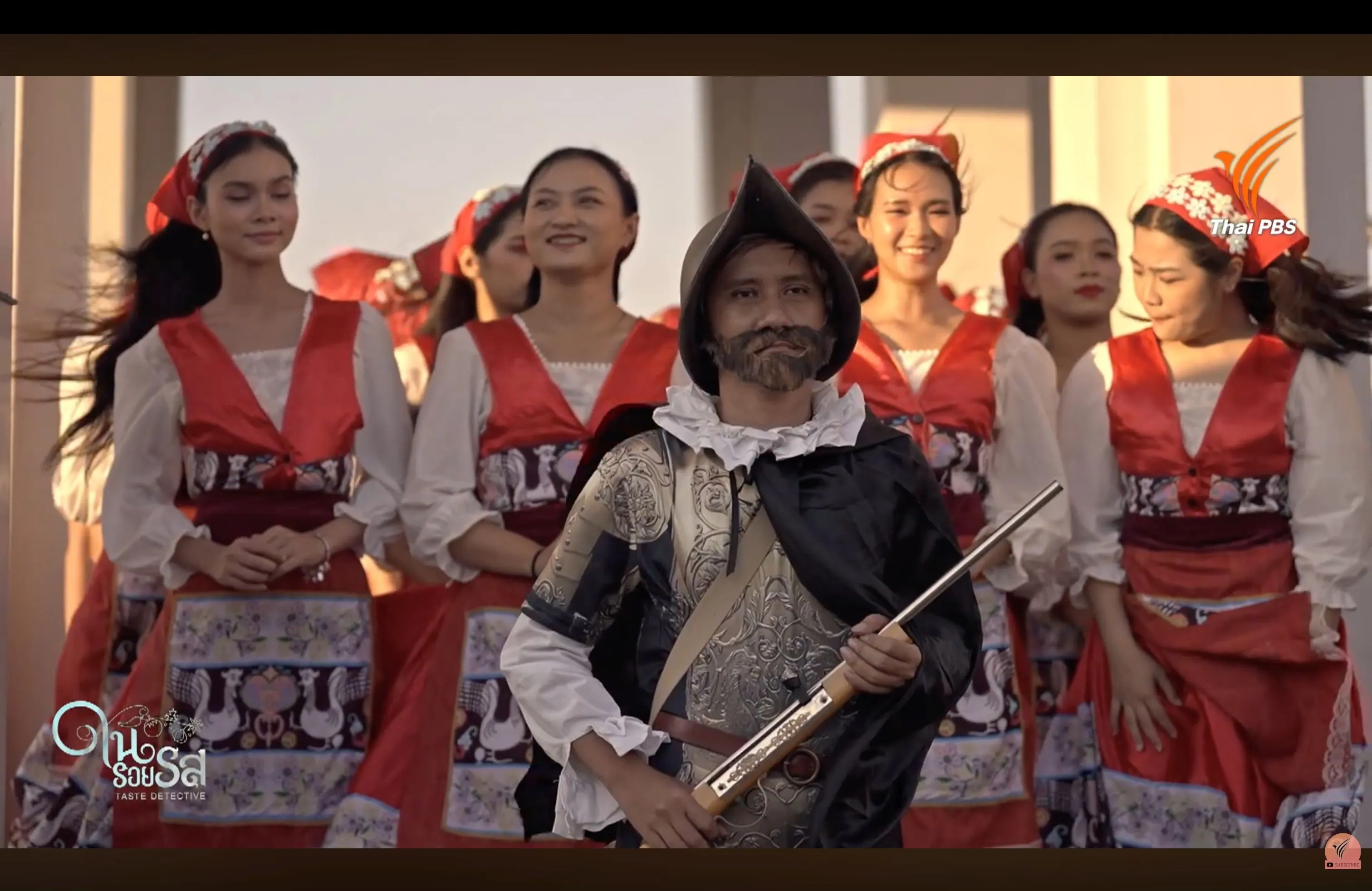
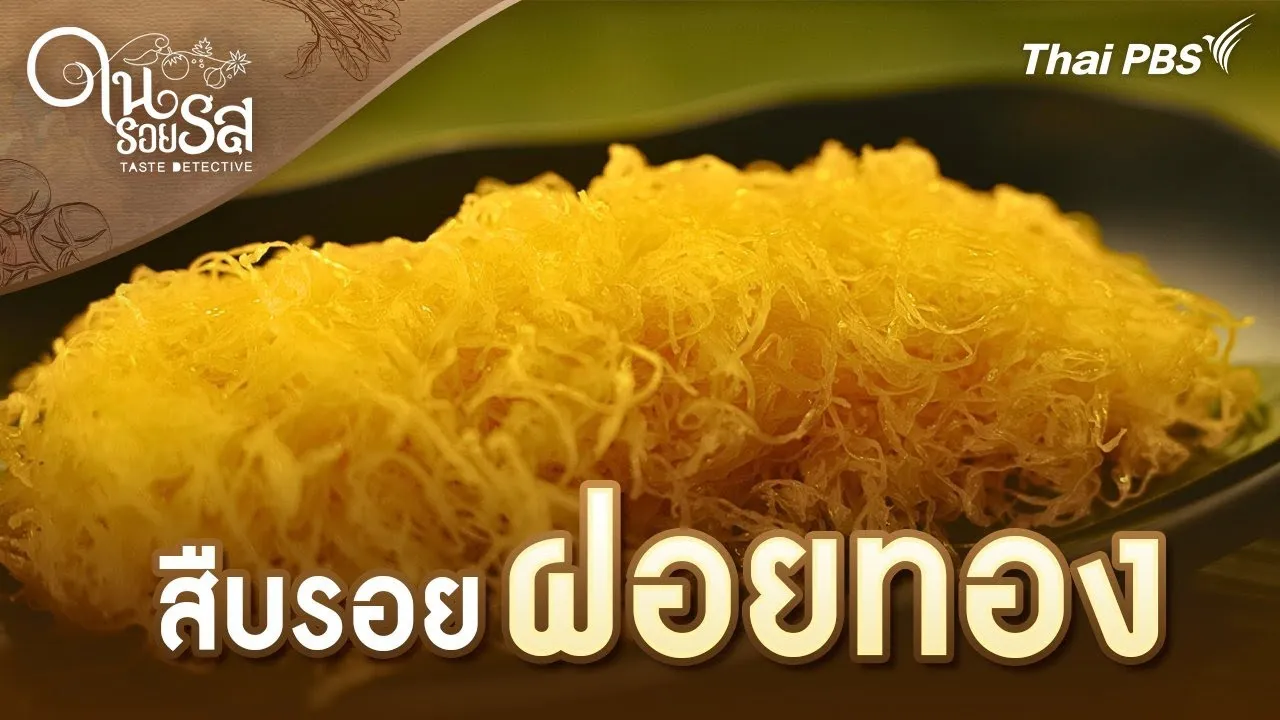
The overall message of this documentary episode presents desserts as a “tool for preserving ethnic identity” within a larger society. Today, the descendants of the Kudeejeen people may no longer be able to speak Portuguese, and their bloodline and appearance have entirely blended with Thai. Yet, the single thing that still confirms their roots and identity, preventing them from disappearing with time, is these desserts. Inheriting the making of Foi Thong and Khanom Farang Kudeejeen through traditional methods, without using machinery and refusing to change the recipes to please the capitalist market, is an attempt to preserve the memory of their ancestors. It is a pride in their bloodline passed down from generation to generation within the household kitchen.
The documentary concludes by making the audience understand that the strands of Foi Thong resting on a plate are not an intensely sweet dessert, but a historical thread binding people across oceans, across time, and across cultures, allowing them to still connect with and perceive the stories of the past through food inherited down to the present day.
About Author
บอส หลงอินเดีย
นักเขียนผู้รักประวัติศาสตร์และความแตกต่าง ที่หลงใหลการเดินทางและการจดบันทึก เพื่อเข้าใจความคิดผู้คนต่างวัฒนธรรม